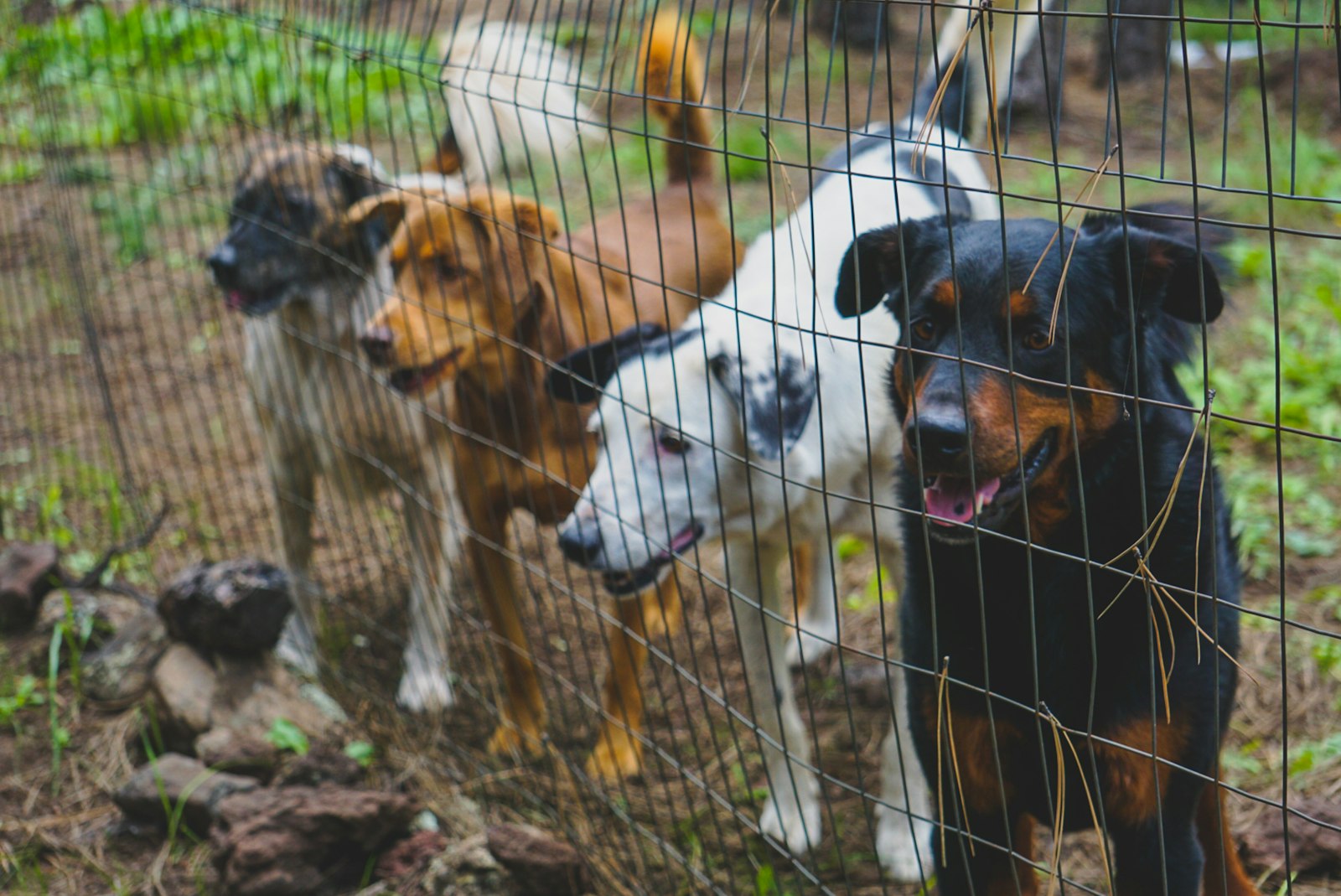
Many owners imagine dog daycare as a full day of wrestling, zoomies, and nonstop tail wagging. That is understandable, but it is not usually what a healthy daycare day looks like.
Once dogs settle in and stop reacting to drop-offs, pickups, and the general buzz of the room, their real behavior starts to show. They make choices. They gravitate toward certain dogs, avoid others, take breaks, check in with staff, and sometimes decide they are done socializing for a while.
That matters if you are looking at dog daycare in Santa Cruz. A lot of local dogs already get plenty of stimulation from walks, beach outings, trail time, and active households. Many do not need more chaos. They need structure, appropriate social time, and a place where they can stay regulated.
What dogs do when they think no one is watching tells you a lot about whether daycare is actually working for them.
Most dogs do not play all day
One of the biggest misconceptions about daycare is that dogs should be active from open to close. In reality, healthy daycare behavior usually comes in waves.
A dog might greet the group, play for a bit, wander off to sniff, rest by a wall, follow a handler around, then rejoin for another short round. Even very social dogs usually do not want intense interaction all day long.
That is a good sign, not a disappointing one. Dogs that can pause, disengage, and regulate themselves are often coping better than dogs that seem wound up for hours straight. Constant motion does not always mean a dog is having fun. Sometimes it means the environment is too stimulating or the dog is having trouble settling.
A well-run daycare expects dogs to shift gears throughout the day. The goal is not nonstop activity. It is a balanced day with play, rest, supervision, and enough recovery time to keep dogs safe and comfortable.
Dogs tend to choose their own social circles
When people are not directing every interaction, dogs often show who they actually enjoy spending time with. Some prefer one or two steady play partners. Some like a quick game of chase and then want space. Some stay near dogs with a similar play style, size, or energy level. Others would rather stay close to staff than join the busiest part of the group.
That is normal. A dog does not need to be friends with every dog in the room to do well at daycare.
In fact, expecting every dog to be social with everyone can create problems. Dogs have preferences, boundaries, and off days just like people do. Good daycare staff notice those patterns. They learn which dogs pair well, which groupings get too intense, and which dogs need more room than they first seemed to.
If the feedback you get is always just “your dog played a lot,” that is not especially useful. Better feedback sounds more like this: your dog played nicely with two calmer dogs, rested well after lunch, and seemed less interested in the louder group later in the day.
That kind of observation suggests staff are paying attention to your dog as an individual, not just supervising a crowd.
Watching, sniffing, and wandering are normal daycare behavior
Some owners worry that if their dog is not actively wrestling or running, daycare is somehow not worth it. But dogs do a lot of normal dog things in group care that are easy to overlook.
They sniff the fence line. They investigate where another dog just walked. They pause and watch before deciding whether to join in. They move toward shade, a bed, a quieter corner, or a familiar handler. They wander because they are taking in information, not because they are bored.
That quieter behavior can be a sign that a dog feels settled enough to make choices.
In Santa Cruz, many dogs already get outdoor stimulation from neighborhood walks, local trails, and time near the coast. For those dogs, daycare does not need to feel like a canine theme park. Sometimes the real value is supervised social exposure and a structured change of scene, not maximum excitement.
Rest is part of a good daycare day
One of the clearest signs of a well-managed daycare is whether dogs are allowed to rest.
Puppies need downtime. Adolescent dogs need it, even when they act like they do not. Adult dogs need it too, especially in a stimulating group setting.
When dogs settle in and no one is actively hyping them up, many will choose to lie down, lean against a barrier, settle next to a handler, or quietly remove themselves from play for a while. That is healthy.
What is not healthy is a daycare setup that keeps dogs activated all day without enough decompression. In those environments, dogs often get progressively more tired, mouthy, pushy, and less socially graceful as the day goes on.
A balanced daycare routine should make room for real rest, not just a few short lulls between busy moments.
Transitions often reveal the most
Some of the most important daycare behavior does not happen during play. It happens during transitions.
Dogs often get more activated when new dogs arrive, when groups are moved, when gates open, when staff rotate dogs between spaces, or when pickup time approaches. Those moments can tell you more about a dog's stress level than the easy parts of the day.
A dog that seemed fine earlier may become pushy, vocal, clingy, or overwhelmed during these changes. Another may hang back and avoid the rush. Another may start hovering at the gate or trying to control access points.
That is why good daycare management is not just standing in a room full of dogs. It is reading the room when arousal rises and behavior gets messier.
If a daycare cannot clearly explain how it handles introductions, regrouping, overstimulation, and busy transition periods, that is worth paying attention to.
Daycare can show whether your dog actually likes daycare
Not every dog enjoys group daycare, and many dogs make that fairly obvious when no one is trying to sell the experience.
Some dogs consistently choose people over other dogs. Some opt out of play again and again. Some do fine for short stretches but start to fray when the room stays busy too long. Some are fine once a week but seem overloaded if they go more often. Some do well in small groups and struggle in larger ones.
That does not mean daycare is bad. It means fit matters.
One of the most useful things daycare can reveal is whether your dog truly enjoys this kind of environment, merely tolerates it, or finds it too much. Those are very different outcomes, and they should shape your decisions.
For Santa Cruz dog owners, that distinction matters because daycare is not the only way to meet a dog's needs. Some dogs do better with one-on-one walks, training outings, sniff-heavy adventures, or a midday visit instead of full group care.
The best routine is not always the one that looks the most social. It is the one your dog handles well and recovers from well.
What good staff should be able to tell you
You do not need a dramatic play-by-play at pickup. You do want staff who can describe your dog with some detail.
A thoughtful daycare should be able to tell you things like:
- whether your dog initiated play or mostly responded to other dogs
- whether your dog rested, and how often
- what kind of play style your dog showed
- whether your dog got overwhelmed during busy moments
- whether your dog seemed more comfortable in a smaller or calmer group
- how your dog handled the second half of the day, not just the first
That kind of feedback is much more useful than generic reassurance. “Your dog had a blast” sounds nice, but it does not help you decide whether the setup is a good fit.
A better report might be that your dog had a balanced day, got a little overstimulated during one transition, recovered well after a break, and seemed happiest with calmer dogs. That gives you something real to work with.
What your dog is like after daycare matters too
The real story does not end at pickup.
After a good daycare day, many dogs come home pleasantly tired, drink some water, settle down, and have a normal quiet evening. After a day that was too much, the picture can look very different.
Some dogs come home wired, frantic, extra mouthy, clingy, or unable to settle. Others seem completely flattened in a way that looks more like exhaustion than healthy fatigue.
That after-effect matters because some dogs can hold it together in the daycare setting while quietly accumulating stress. What you see at home later often tells the truth.
The goal is not nonstop fun
It is easy to judge daycare by how exciting it looks. But the best daycare is usually not the one where every dog appears amped up from morning to evening.
It is the one where dogs can move through the day in a more natural rhythm. They can play, pause, sniff, watch, rest, reset, and step away when they need to. They can be social without being flooded. And the staff can tell the difference between a dog having fun and a dog simply running hot.
If you are comparing dog daycare options in Santa Cruz, it helps to look past the busy-room impression and pay more attention to whether the dogs seem well managed, readable, and able to settle. That is often the better sign of a healthy environment.
When the performance drops away and dogs start showing their real preferences, you learn a lot. And that is often what tells you whether a daycare is actually the right fit for your dog.